Accessibility
Is a Human Right
A TEDx Talk on why inclusive design isn't a luxury — and how a 12-year-old's observation at a park led to the Smart Kiosk.
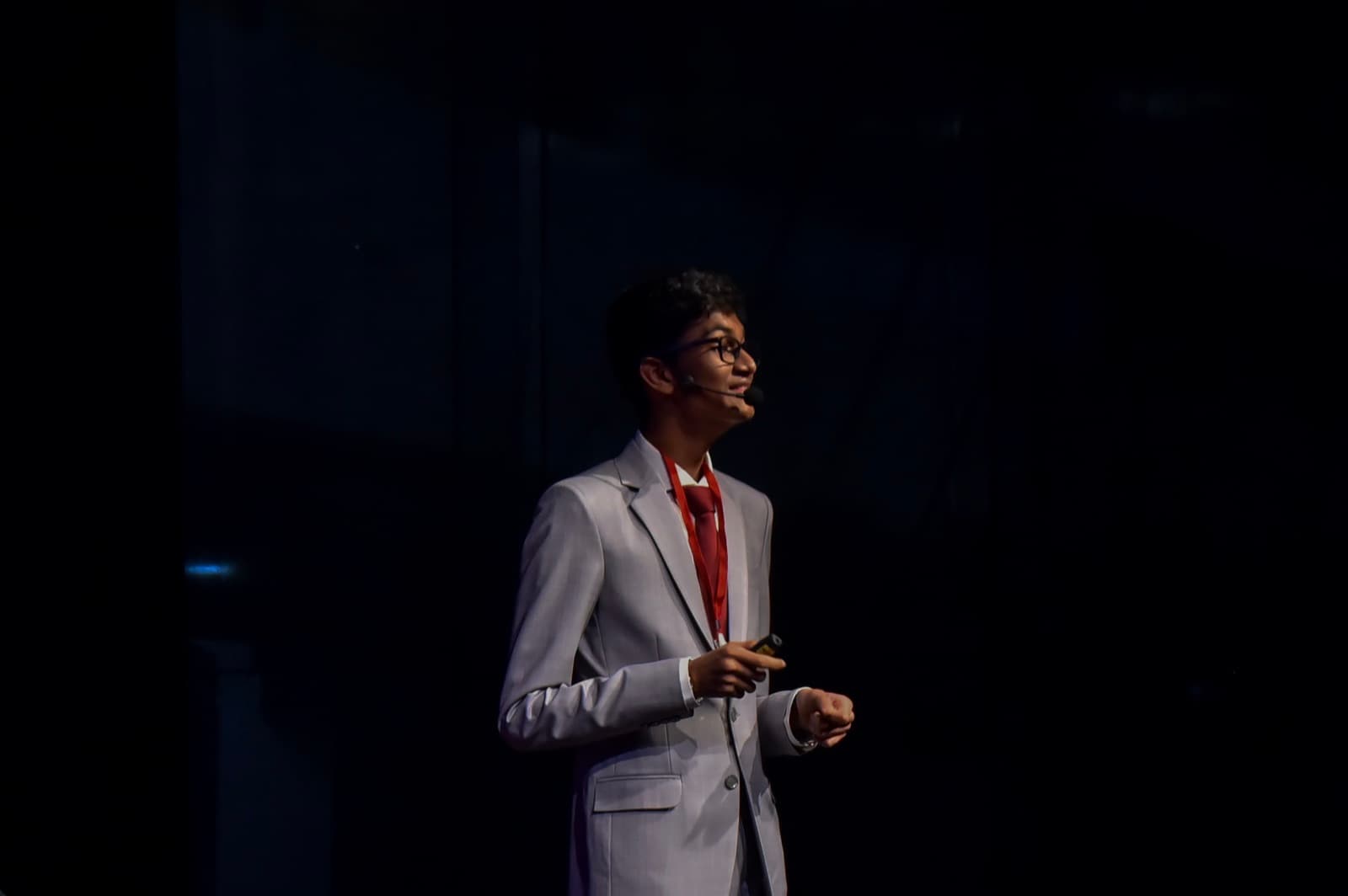
Featured in The Global Access Files
The Spark
I was 12 when I first truly understood what it meant to be visually or hearing impaired. It wasn't in a classroom or through a textbook. It was during a routine visit to the park with my father. As we approached the entrance, I noticed a visually impaired man standing at the edge of a road, his cane tapping uncertainly as traffic rushed by. He couldn't cross the road without help.
It struck me that something so simple shouldn't be such a daunting task. That moment ignited a passion in me to explore ways to make public spaces more inclusive and accessible.
“They don't need your sympathy. They need respect and dignity. They need the chance to be seen as equals.”
The Scale of the Problem
Around 6.3 crore people in India have hearing impairments, and 7.5 crore have visual impairments. That's 13.8 crore people — an entire population the size of Maharashtra — unable to contribute fully to the growth of this country because we aren't providing adequate support.
The estimated net loss of Gross National Income in India due to visual impairment alone is ₹845 billion. That's enough to give every single citizen of India ₹600 each.
What the Talk Explores
- Why accessibility is a fundamental human right, not a privilege
- How countries like Sweden, Japan, and the US have made public spaces fully accessible
- Why India lags behind despite legislation like the Rights of Persons with Disabilities Act of 2016
- The Smart Kiosk — an instrument that answers questions in human-like voice, Braille, and sign language
“Accessibility isn't just a box to check — it's a way of making society more inclusive for all.”
The Thinking Behind the Talk
Developing a TEDx Talk is an engineering problem. You have a fixed time window, a complex idea, and an audience that needs to follow every step. I approached it the same way I approach building systems: start with the user, work backwards from the outcome, and iterate relentlessly.
- Define the core message: Accessibility is a human right. The audience should leave feeling compelled to act.
- Lead with story, not statistics: Open with the park scene. Make it personal before making it systemic.
- Use data to shock, then inspire: The ₹845 billion figure lands harder after the emotional opening.
- End with a challenge: Don't just inform — call the audience to action.
Watch
My TEDx Talk on Accessibility
Featured during Disability Pride Month. A 10-minute exploration of why inclusive design is a human right — and how the Smart Kiosk can make it a reality.
Watch the Talk